PREPARING AN ASPEN HOME FOR WINTER: THE MOUNTAIN HOMEOWNER'S FALL CHECKLIST
Homeownership & Lifestyle
Homeownership & Lifestyle
In Aspen, fall doesn't linger forever.
One week, you're looking at golden leaves.
The next, the temperature drops overnight, and the mountains wake up white.
For homeowners, that transition comes with a familiar rhythm.
Patio furniture moves inside.
Skis replace bikes in the mudroom.
Heating systems come back to life.
Snow-removal plans return to the calendar.
And homes that may have spent much of summer open to the outdoors begin preparing for a very different season.
October is the ideal time to get ahead of it.
Not because winter has fully arrived—but because once it does, many of these tasks become considerably more complicated.
Here's where we'd start.
In Santa Barbara, turning on the heat can wait.
In Aspen, it can't.
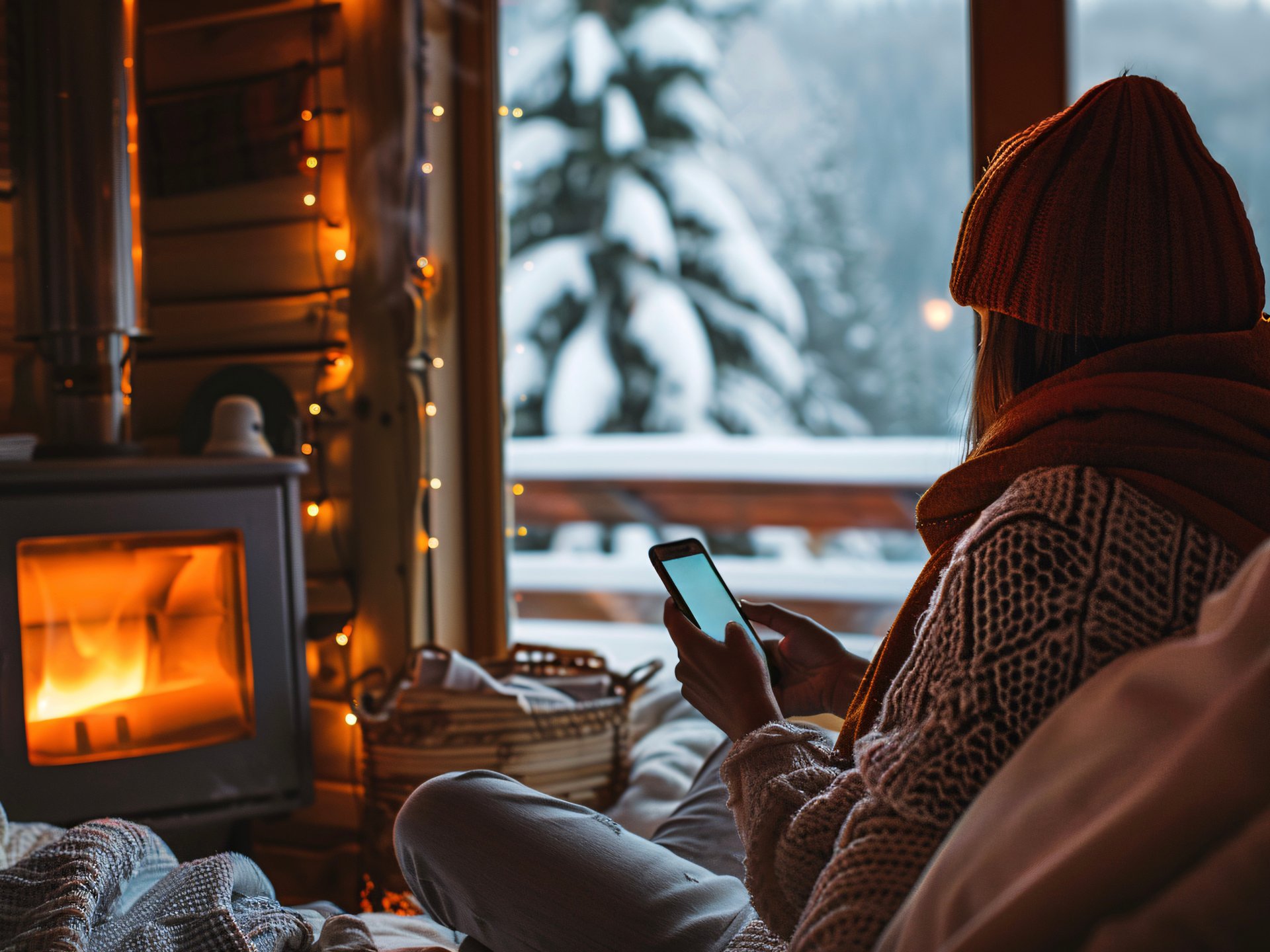
Before temperatures consistently fall below freezing, make sure the home's primary heating system is operating properly.
Depending on the property, that might include a furnace, boiler, radiant floor heating, heat pumps, or a combination of systems.
Replace filters where applicable, review service schedules, and address unusual noises, inconsistent temperatures, or other signs that something isn't working as expected.
If the property is a second home, reliable heating becomes even more important.
A heating problem isn't merely uncomfortable when temperatures drop well below freezing.
It can quickly become a property problem.
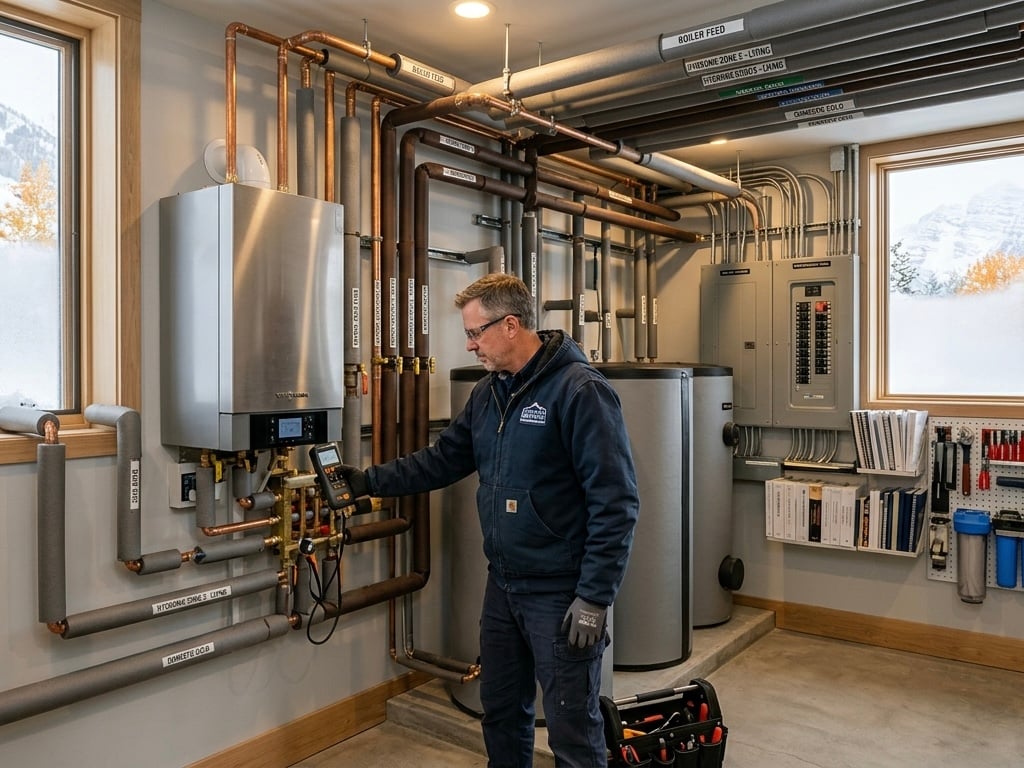
Few winter problems can turn into a major issue as quickly as frozen plumbing.
Pay particular attention to pipes in vulnerable areas such as exterior walls, garages, crawl spaces, mechanical rooms, and other less-heated spaces.
Disconnect outdoor hoses.
Prepare exterior faucets and irrigation systems as appropriate for the property.
Know where your main water shutoff is located.
And if you leave Aspen for extended periods during winter, don't assume turning the thermostat down as far as possible is necessarily the best strategy.
Maintaining appropriate indoor temperatures and having systems monitored can help reduce risk while you're away.
Every home is different, so properties with complex plumbing or seasonal systems should be professionally winterized when needed.
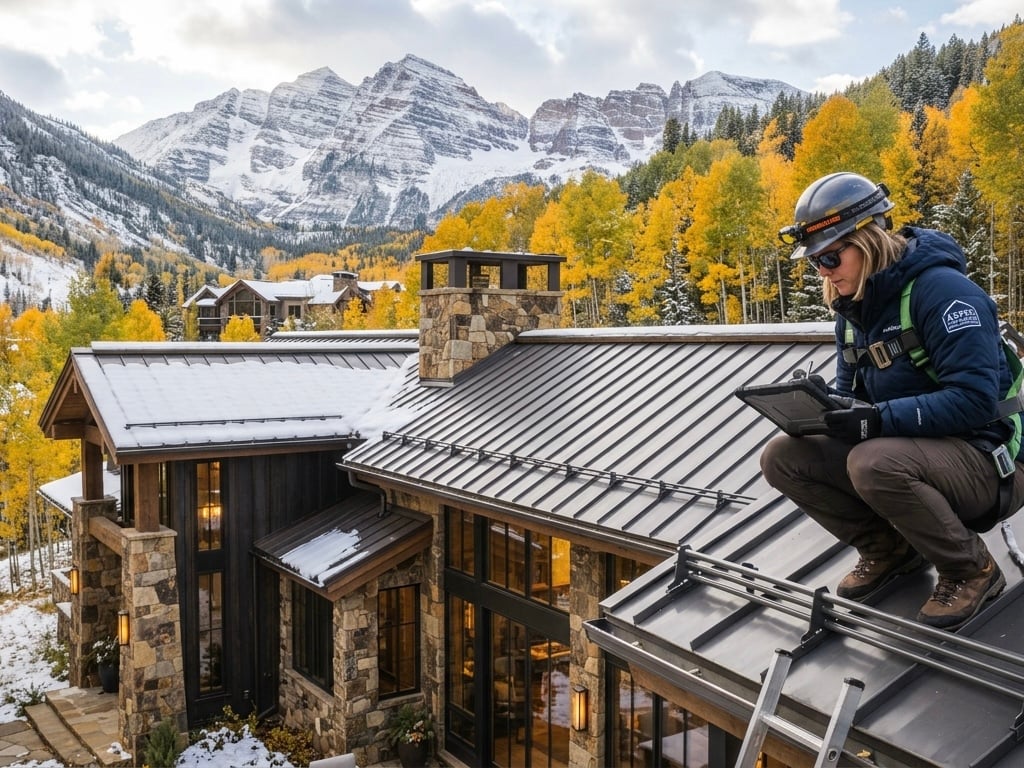
Roof maintenance becomes particularly important in a snow climate.
Before winter settles in, inspect the roof for damaged materials, flashing issues, drainage concerns, and other areas that may require attention.
Snow accumulation, freeze-thaw cycles, and ice can expose weaknesses that were easy to ignore during summer.
Depending on the property's architecture, you'll also want to understand how snow is designed to move—or remain—on the roof.
Some homes use snow-retention systems to help manage sliding snow.
Others have roof or gutter heat systems designed to address ice in specific areas.
These systems should be inspected and operated according to professional and manufacturer recommendations.
A mountain roof isn't simply keeping weather out.
It's managing winter.
Heated driveways and walkways can be one of those mountain-home features you barely think about when they're working.
When they're not?
You notice quickly.
If your property has a snowmelt system, test it before regular snowfall begins.
Confirm that controls, sensors, pumps, boilers, and related equipment are operating as intended.
The same applies to heated exterior stairs or other surfaces designed to remain clear.
Discovering a problem in October gives you options.
Discovering it beneath several inches of snow is considerably less convenient.
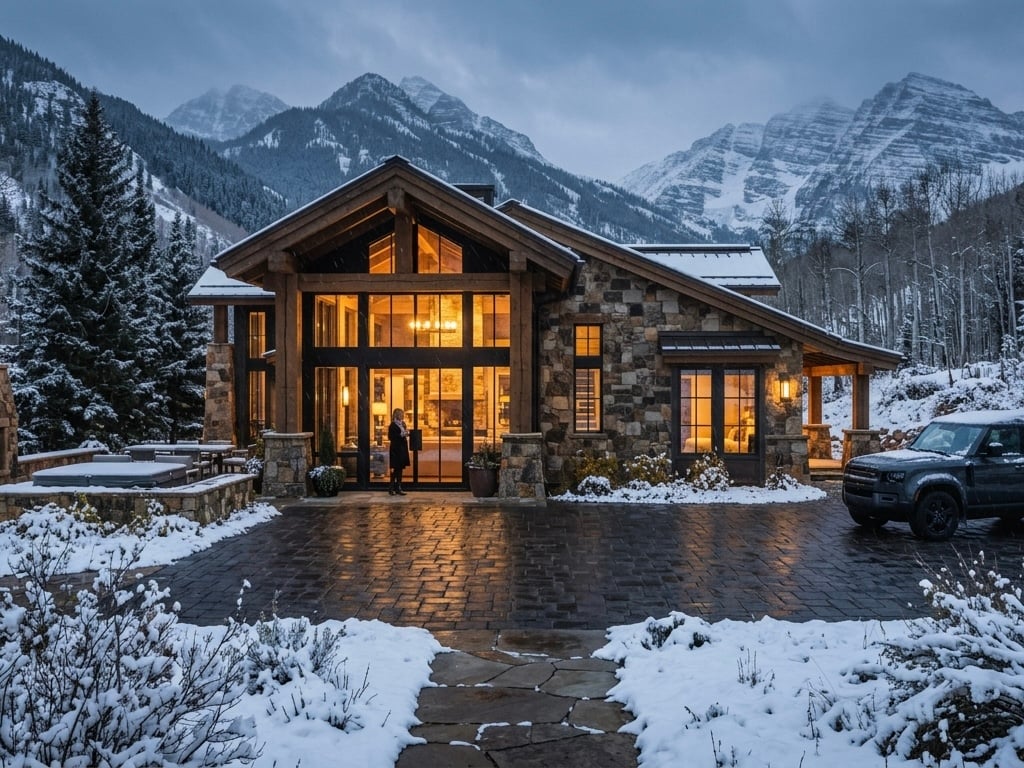
Snow removal isn't something to figure out after the storm.
Before winter, establish how the driveway, walkways, stairs, decks, and other necessary access points will be maintained.
For a primary residence, that may mean arranging regular service.
For a second home, it becomes even more important to have a reliable plan in place while you're away.
Think beyond simply clearing a path.
Where will accumulated snow go?
Which areas need consistent access?
Are there drainage considerations when temperatures rise?
Are decks or other exterior areas included in the plan?
A beautiful snowfall is considerably easier to enjoy when the logistics are already handled.
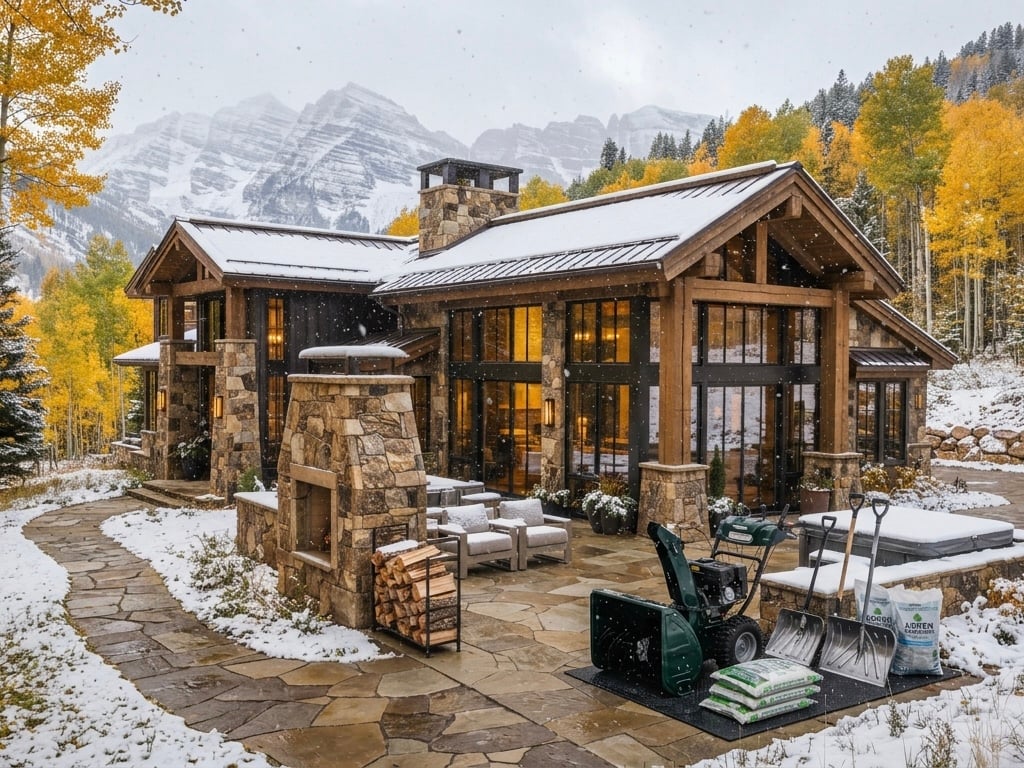
Few things belong to an Aspen winter quite like a fire.
But before the first one of the season, make sure the fireplace and chimney are ready.
Wood-burning systems may require professional inspection and cleaning depending on use and condition.
Gas fireplaces should also be checked and serviced as recommended.
Look at vents, screens, doors, and controls.
Confirm that carbon monoxide and smoke alarms are functioning properly.
Then, once everything is ready, bring in the firewood.
The first genuinely cold night will take care of the rest.
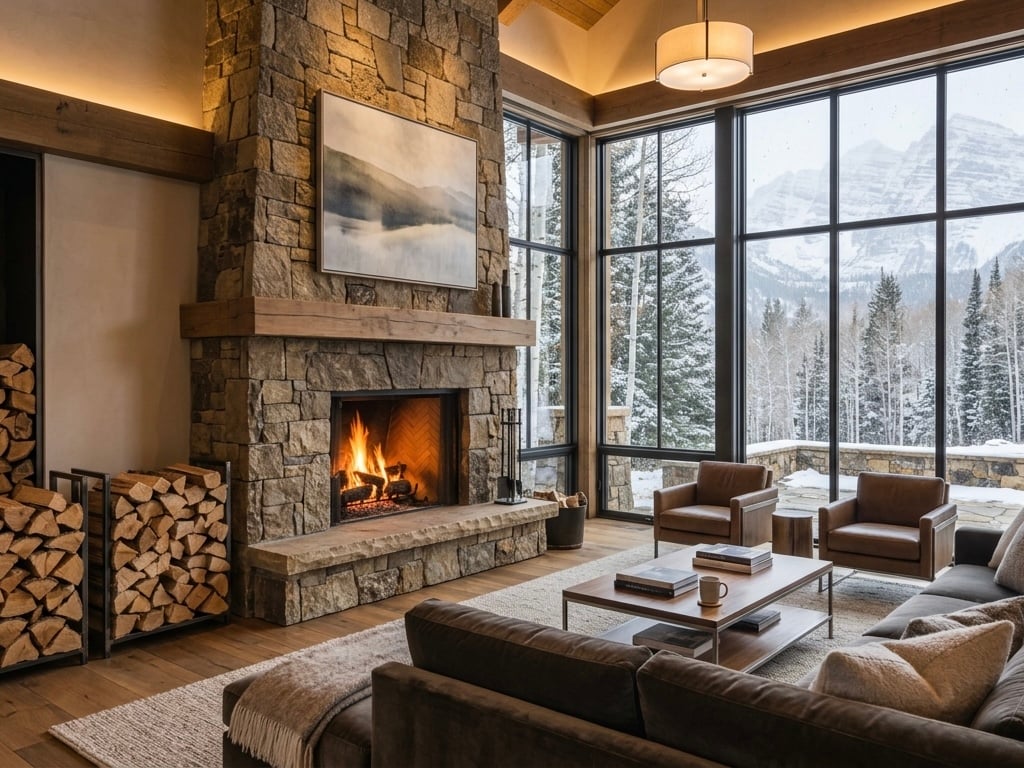
In a mountain home, the mudroom is not an afterthought.
By winter, it's infrastructure.
Boots.
Helmets.
Gloves.
Goggles.
Jackets.
Skis.
Snowboards.
Wet layers.
Dog gear.
And somehow, all of it needs somewhere to go.
October is the moment to reset the space.
Move summer gear out.
Check boot dryers and storage systems.
Create room for equipment.
Make sure hooks, benches, racks, and cubbies still work for the way the household actually uses them.
A well-designed mudroom can make the difference between winter gear taking over the house and everything having a place.
Sometimes luxury is marble.
Sometimes it's knowing exactly where your gloves are.
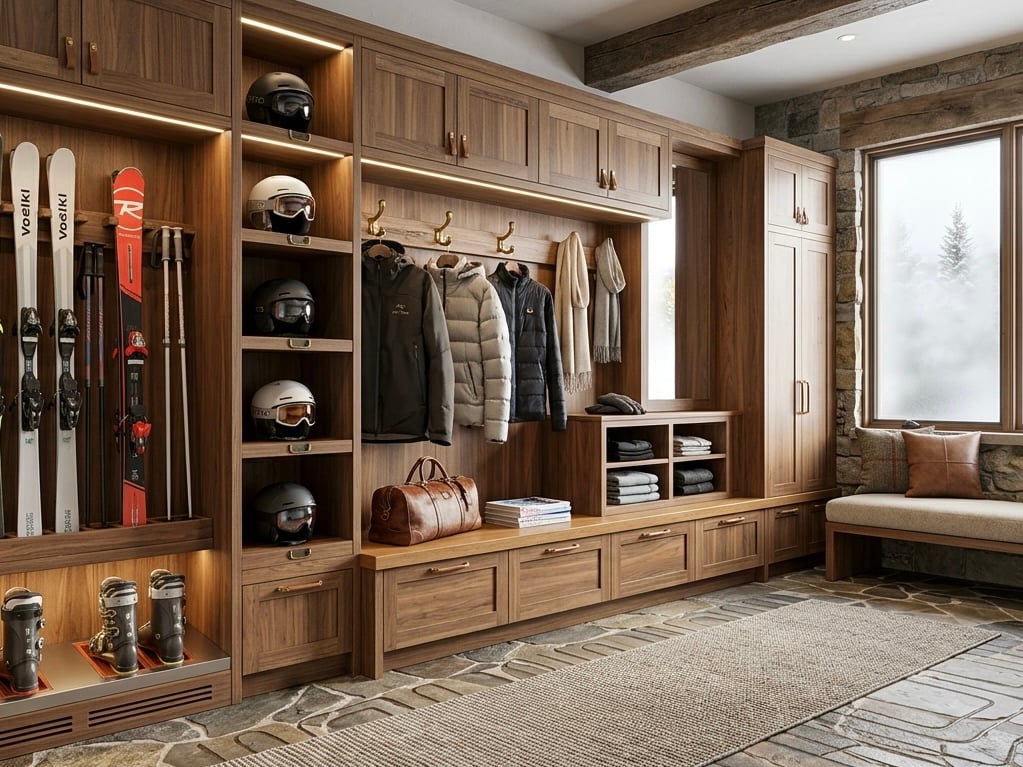
Aspen's patios and decks work hard during summer.
By October, decide what stays and what goes.
Clean and store furniture that won't remain outdoors.
Protect grills and outdoor kitchens as appropriate.
Drain or winterize seasonal water features.
Store cushions and accessories.
Check exterior lighting.
Prepare planters and irrigation systems for colder temperatures.
But don't assume every outdoor space has to disappear until spring.
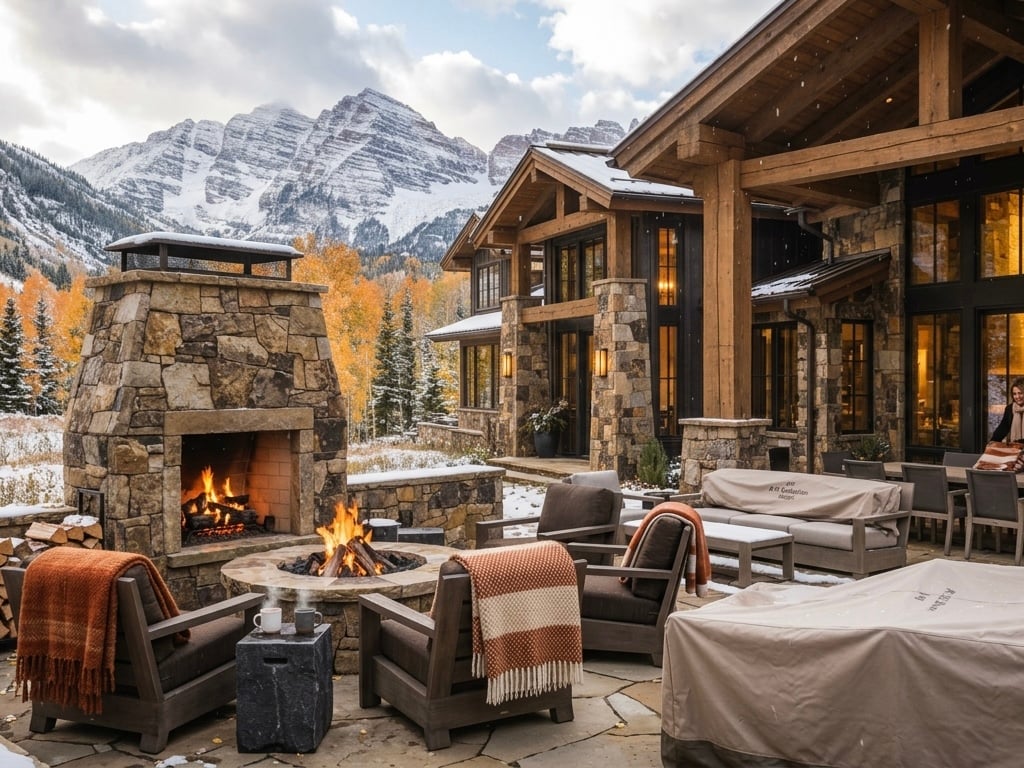
A protected terrace with heaters or a fire feature can still be wonderful on a sunny winter afternoon.
The goal is to prepare the property without giving up the outdoor lifestyle entirely.
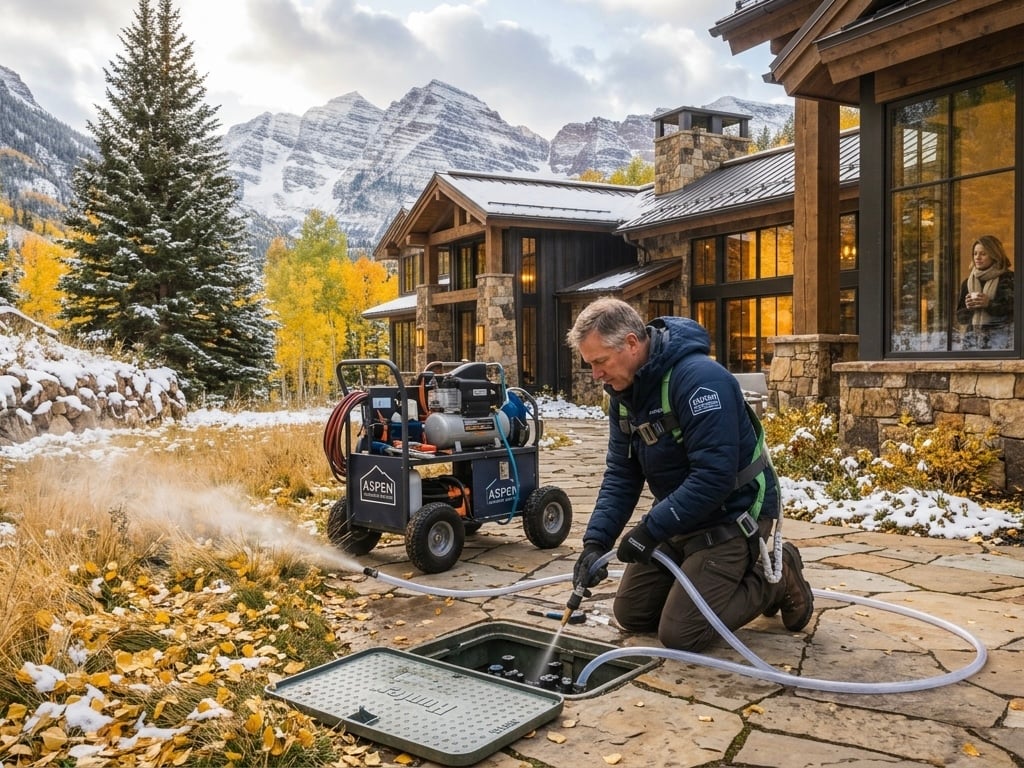
Landscaping may be entering dormancy, but the systems supporting it still require attention.
Irrigation lines and other seasonal exterior water systems may need to be shut down and winterized before prolonged freezing temperatures.
The correct process depends on the property's system and landscape design.
This is one of those tasks where professional maintenance is often worth scheduling early.
The same principle applies to fountains, outdoor showers, seasonal water features, and other plumbing exposed to freezing conditions.
October's recurring lesson is simple:
Do it before you have to.
The garage becomes another important part of mountain living once snow arrives.
Move bikes and summer equipment out of the way.
Make room for skis, snowboards, sleds, roof boxes, and winter vehicle gear.
Check garage-door operation and seals.
If the space is heated, confirm the system is functioning properly.
And prepare the vehicles too.
Depending on how and where you drive, that may include appropriate winter tires, windshield fluid suited to freezing temperatures, emergency supplies, and other cold-weather preparation.
The mountain lifestyle doesn't stop at the front door.
Your car needs to be ready, too.

Preparing a home for winter is one thing.
Preparing a home you may leave unattended for weeks at a time is another.
Aspen's second-home owners should think carefully about what happens when nobody is there.
How will you know if the heat fails?
If a pipe leaks?
If a storm affects the property?
If snow accumulates where it shouldn't?
If there's a power outage?
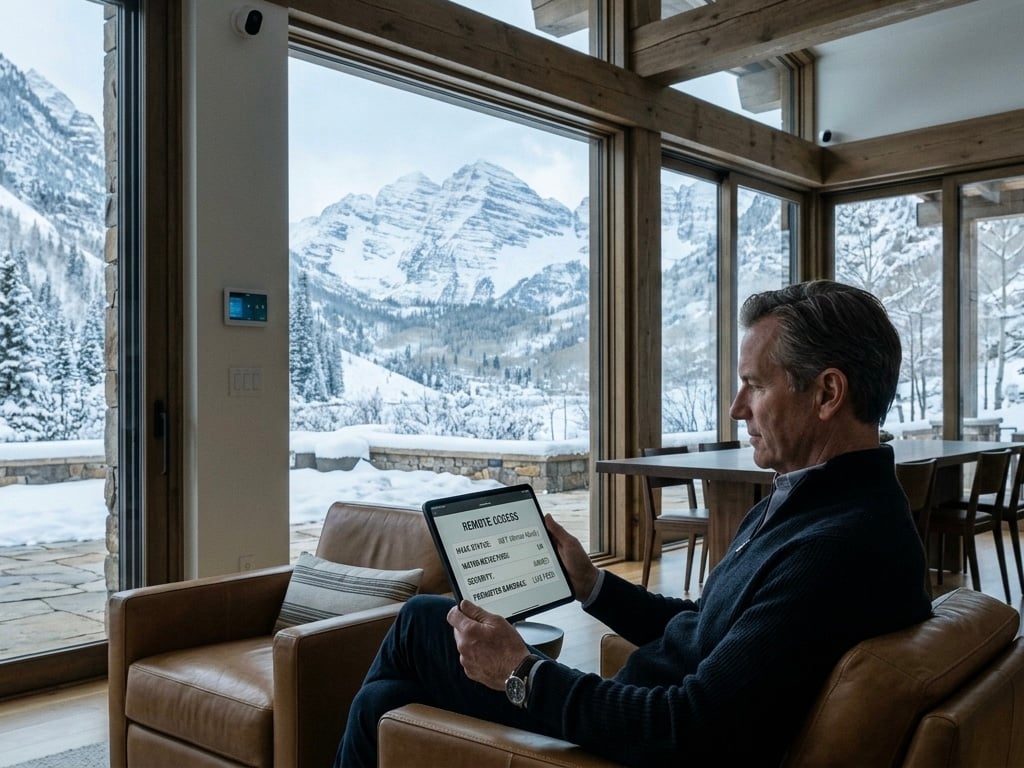
Smart-home systems can help monitor temperature, water, security, and other conditions remotely.
But technology isn't always a substitute for having someone local who can physically check the property when necessary.
A second home should feel easy to leave.
That ease usually comes from good systems behind the scenes.
Before ski season begins, take a few minutes with the things you hope never to need.
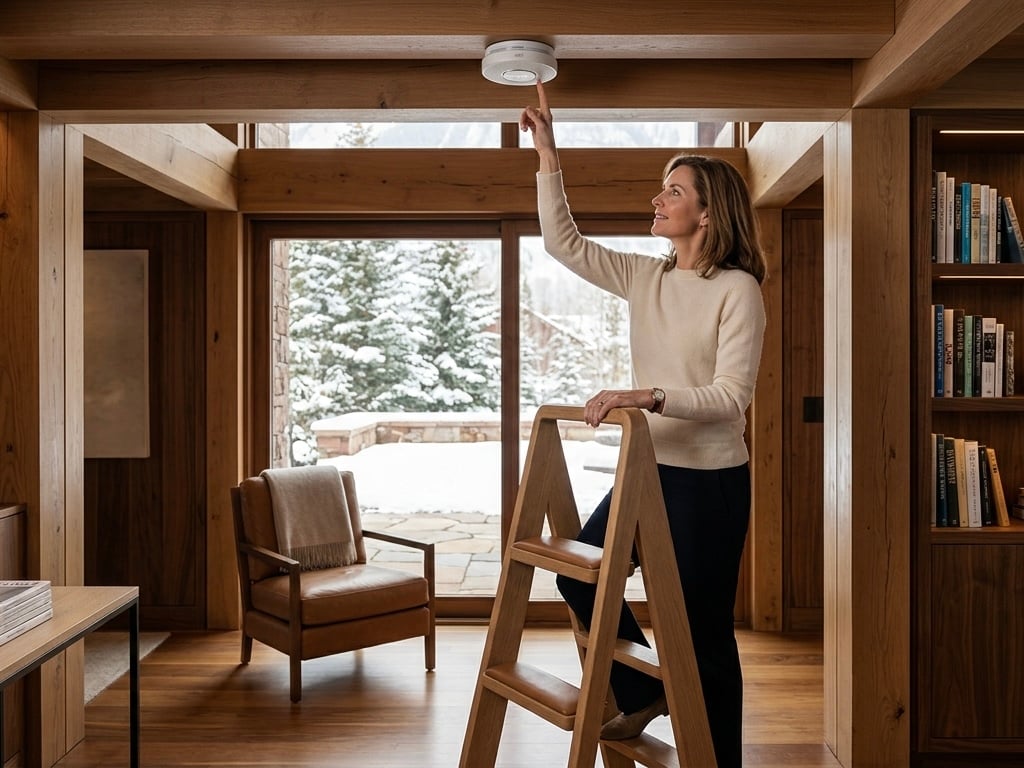
Test smoke alarms.
Test carbon monoxide detectors.
Check fire extinguishers.
Review emergency lighting.
Confirm that security systems and exterior cameras work correctly.
Know where water and gas shutoffs are located.
Make sure important service contacts are current and easy to find.
If you rent the property at any point, additional requirements may apply depending on local regulations and the property's use.
Safety isn't the most glamorous part of owning a mountain home.
It's one of the most important.
Mountain homes often require a team.
Property manager.
Snow-removal service.
HVAC professional.
Plumber.
Electrician.
Roofer.
Landscaper.
Housekeeper.
Smart-home specialist.
Not every property needs every service.
But when winter arrives, knowing exactly who to call matters.
Review your contacts before the season.
Confirm recurring services.
Update access instructions where necessary.
And make sure everyone who needs to understand the property's systems has the information required to do their job.
The best-managed homes often feel effortless.
That's because the effort is happening quietly in the background.
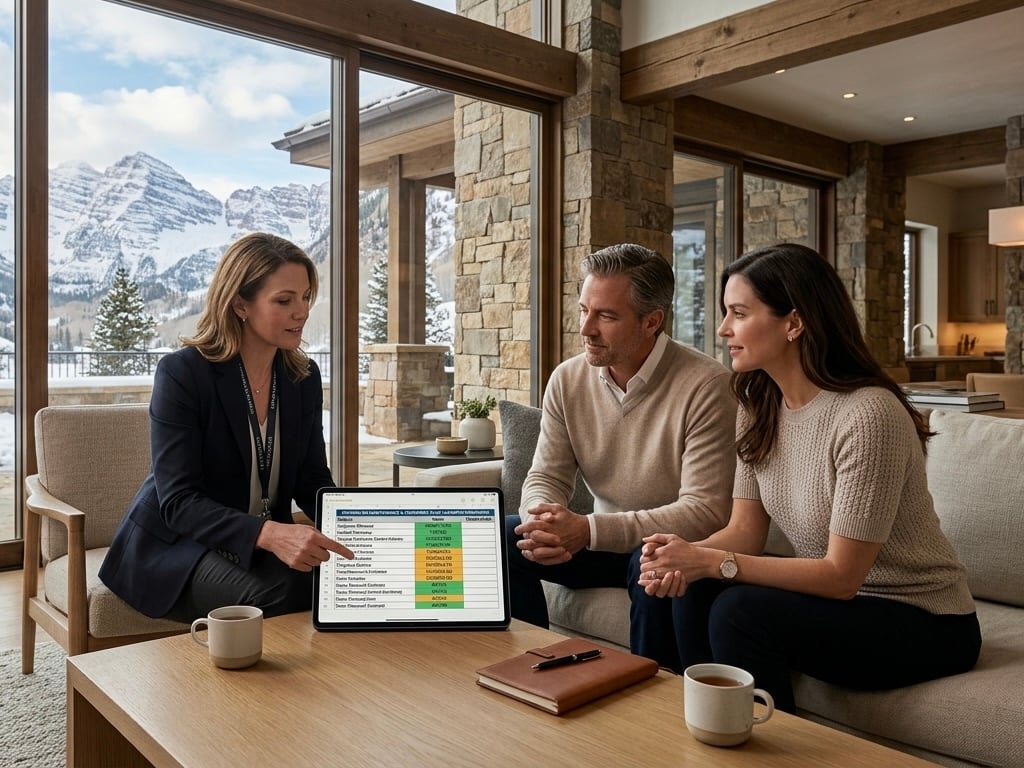
Before winter settles into the valley, review these essentials:
Service and test heating systems.
Protect vulnerable plumbing and exterior water lines.
Inspect the roof and snow-management components.
Test snowmelt systems.
Confirm snow-removal service.
Inspect fireplaces and chimneys.
Test smoke and carbon monoxide alarms.
Reset the mudroom for winter equipment.
Store or protect outdoor furniture.
Winterize irrigation and seasonal water systems.
Prepare the garage.
Get vehicles winter-ready.
Review remote monitoring for second homes.
Confirm local property-management and emergency contacts.
Keep maintenance records in one accessible place.
Every home is different.
A downtown condominium will have very different responsibilities from an estate in the mountains.
The point isn't to complete the longest checklist.
It's to understand your property before winter tests it.
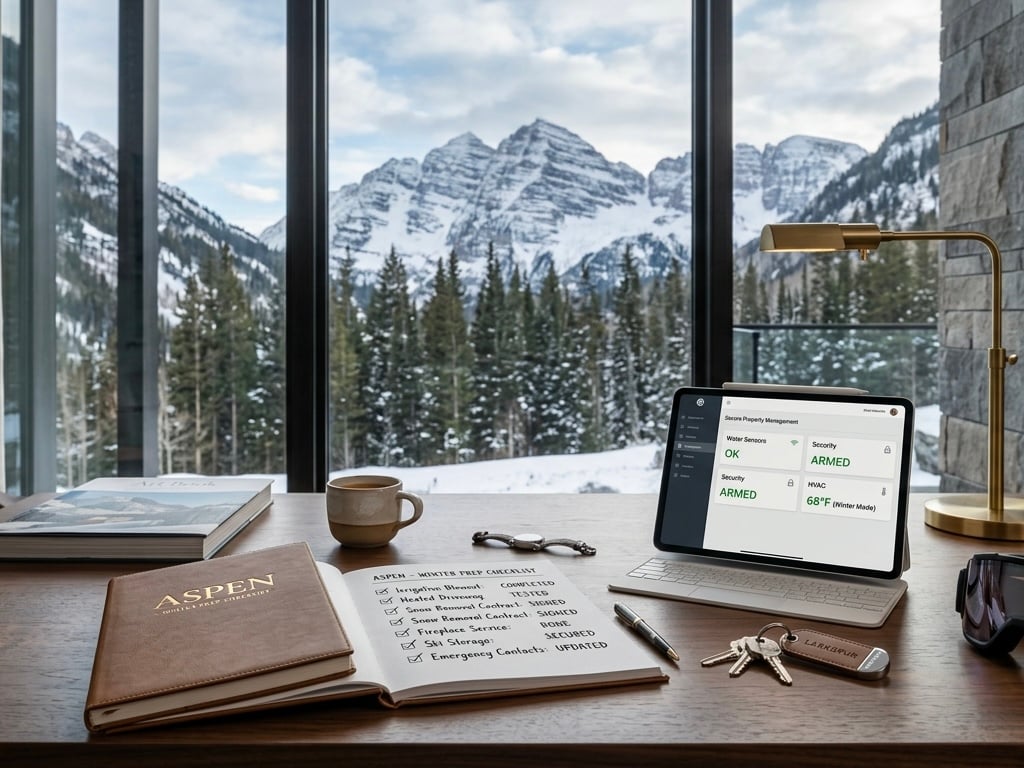
There is something satisfying about the moment an Aspen home is ready for winter.
The skis are waiting.
The firewood is stacked.
The mudroom has been reset.
The driveway plan is handled.
The heat is on.
And outside, the mountains are beginning to turn white.
That's when preparation becomes something else:
anticipation.
At REQUISITE Luxury Properties, we believe owning a mountain home is about much more than the property itself. It's about understanding how the home works through every season—and creating the systems that let you spend less time managing it and more time enjoying where you are.
Because once winter arrives in Aspen, the checklist should already be finished.
The only thing left is to enjoy it.
Many homeowners begin preparing in September or October, before sustained freezing temperatures and significant snowfall arrive. Timing depends on the property's elevation, systems, and weather conditions.
Major areas to review include heating, plumbing, roofs, snowmelt systems, irrigation, fireplaces, outdoor water systems, and snow-removal arrangements.
Maintain appropriate indoor temperatures, address vulnerable plumbing, disconnect or winterize exterior water systems, and follow professional recommendations for your specific property. Second homes may also benefit from remote temperature and leak monitoring.
That depends on the property, but many homeowners arrange professional snow removal for driveways, walkways, stairs, and other access areas. Second-home owners may find regular service particularly useful while they're away.
Consider reliable heating, leak and temperature monitoring, snow removal, security, emergency contacts, and a trusted local person or property-management service that can physically check the home when needed.
Beyond architecture and location, consider heating systems, roof design, snow management, driveway access, mudroom and gear storage, garage configuration, outdoor systems, property-management needs, and how easily you can monitor the home when you're away.
The best realtor combines local market expertise with personalized service and a deep understanding of the luxury lifestyle.
At REQUISITE Luxury Properties, we help buyers and sellers navigate the Aspen and Snowmass luxury market with local expertise, strategic guidance, and exceptional client care.
Stay up to date on the latest real estate trends.
Homeownership & Lifestyle
Before the first major snowfall, a little preparation can make winter in the mountains considerably easier.

Community & Local Living
After the leaves peak and before the lifts begin to turn, Aspen enters a quieter season—one defined by crisp mornings, empty trails, long lunches, and the anticipation… Read more

Community & Local Living
The last golden trails, quiet afternoons downtown, mountain traditions, live performances, and the first hints of ski season—October belongs to those who know how to e… Read more

Homeownership & Lifestyle
Natural materials, extraordinary views, tactile layers, contemporary art, and rooms designed around the seasons—all part of the evolving language of Aspen mountain des… Read more

Luxury & Lifestyle
No skis required. In Aspen, après is less about what you did on the mountain—and more about how beautifully you end the day.

Community & Local Living
Golden afternoons, seasonal ingredients, intimate dining rooms, and a new Restaurant Week—September is a delicious time to experience Aspen.

Community & Local Living
The scenic drives, mountain trails, iconic views, and quiet corners make September one of Aspen's most spectacular seasons.

Community & Local Living
Your guide to live music, food and wine, outdoor adventures, and the first signs of fall in the Rockies.

Design & Renovation Trends
The spaces that define exceptional mountain living.
REQUISITE Luxury Properties combines deep local expertise, skilled negotiation, and regulatory know-how to guide buyers and sellers through successful, seamless transactions in Aspen and Snowmass Village.