DESIGNING FOR THE MOUNTAINS: WHAT MAKES ASPEN INTERIORS DISTINCTIVE
Homeownership & Lifestyle
Homeownership & Lifestyle
There was a time when "mountain home" almost automatically meant dark timber, oversized stone fireplaces, heavy furniture, and a decidedly rustic point of view.
Aspen has moved well beyond that idea.
Today's most compelling interiors can be clean and contemporary, warm and traditional, quietly minimalist, or layered with art and collected pieces.
Some embrace the heritage of the American West.
Others barely reference it at all.
What connects the best of them is something more fundamental:
They understand where they are.
The mountains influence the views. The seasons influence the materials. Snow, sunlight, outdoor adventure, entertaining, and quiet evenings by the fire all influence how rooms need to function.
The result is a style that's difficult to reduce to a single aesthetic.
It's sophisticated without forgetting comfort.
Contemporary without losing warmth.
And deeply connected to the landscape outside.
Welcome to modern mountain design, Aspen style.
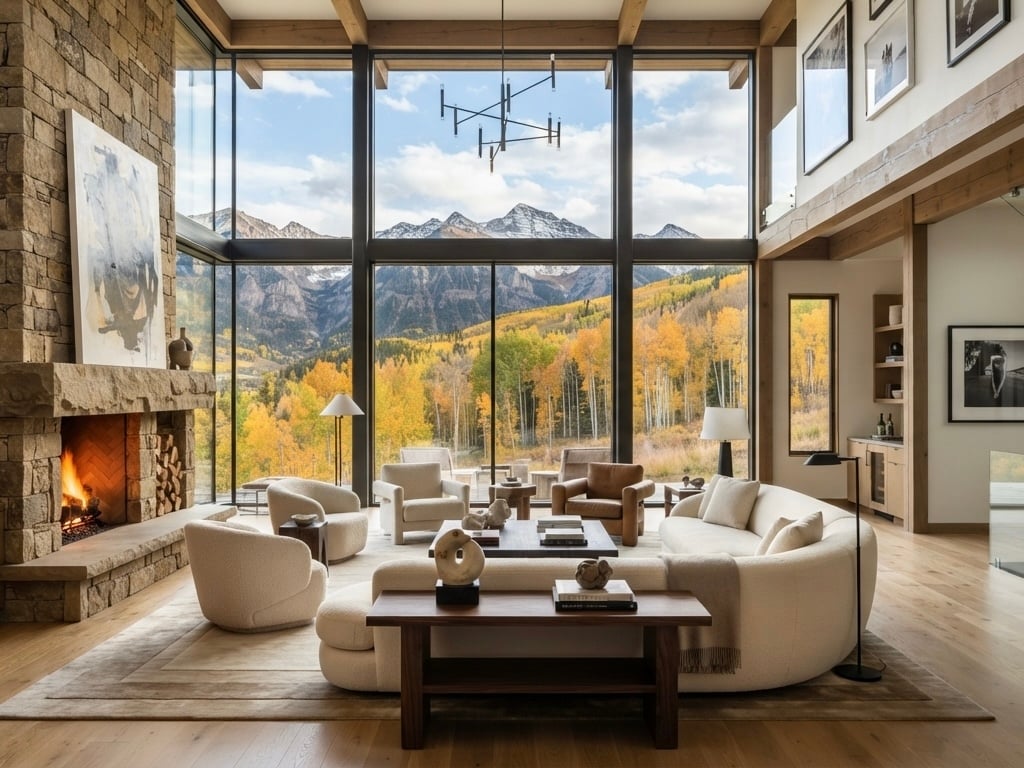
In Aspen, one of the most important design decisions may have nothing to do with furniture.
It's where you look.
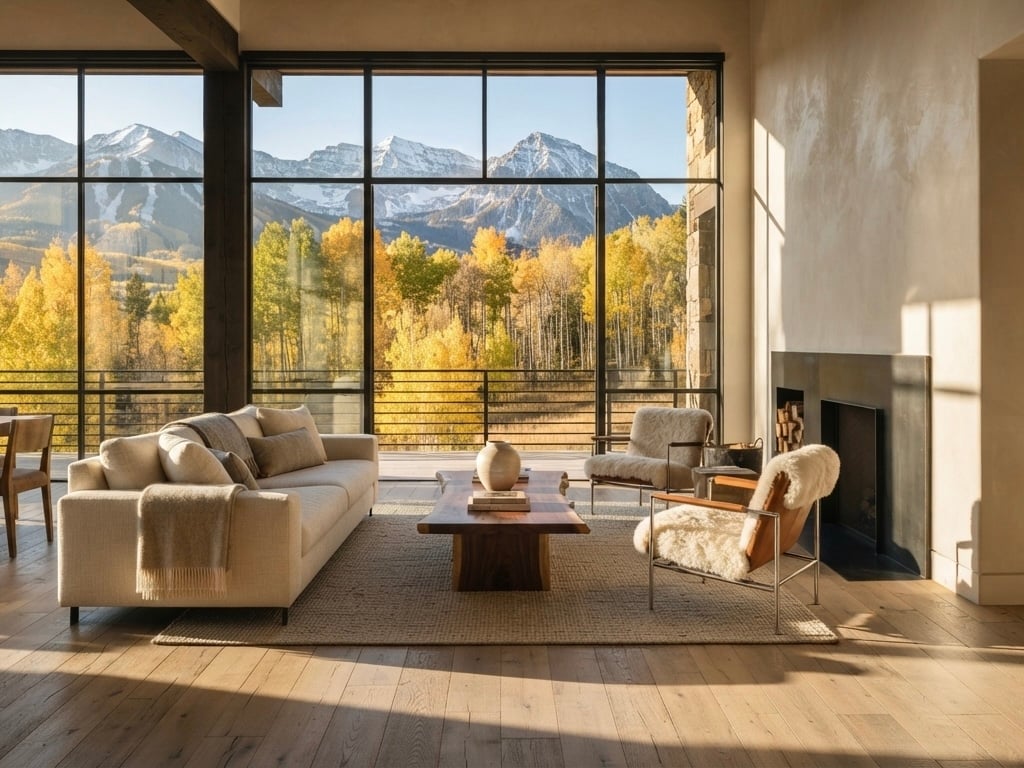
Mountains dominate the landscape here, and thoughtful architecture often treats them as part of the interior.
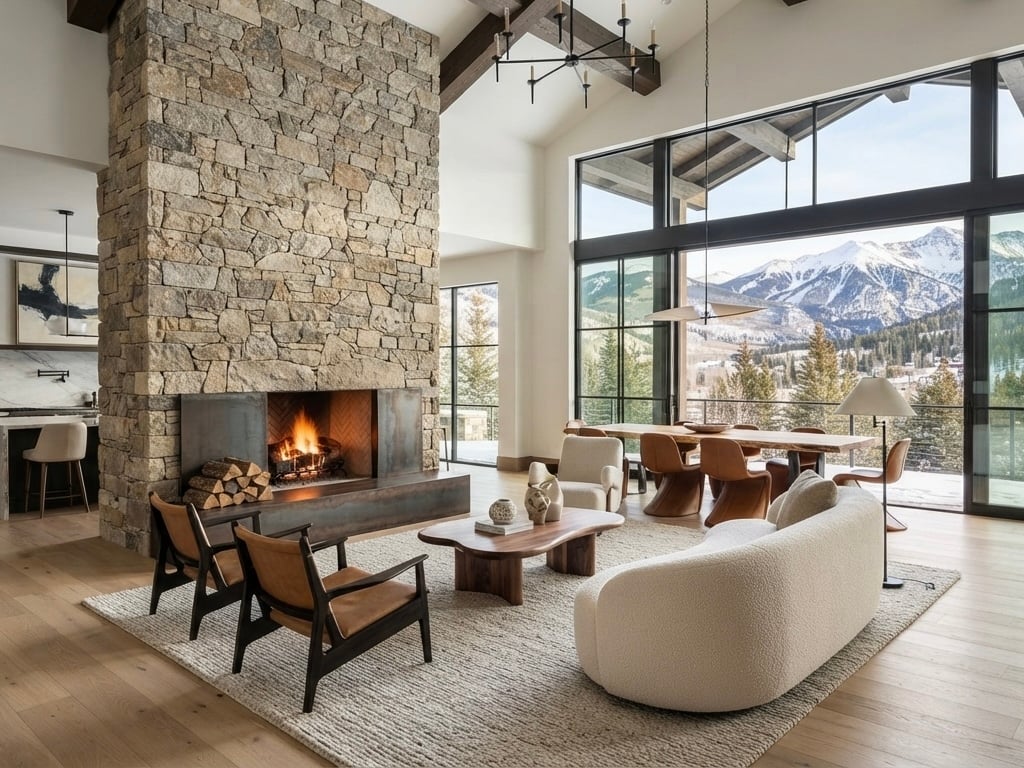
Large windows frame specific views.
Glass walls dissolve boundaries.
Rooms orient toward mountain peaks, forests, or changing skies.
Even the placement of a dining table or reading chair can be influenced by what's visible beyond it.
The strongest designs understand that competing with a Rocky Mountain panorama is usually unnecessary.
Instead, they create a quiet foreground for something extraordinary happening outside.
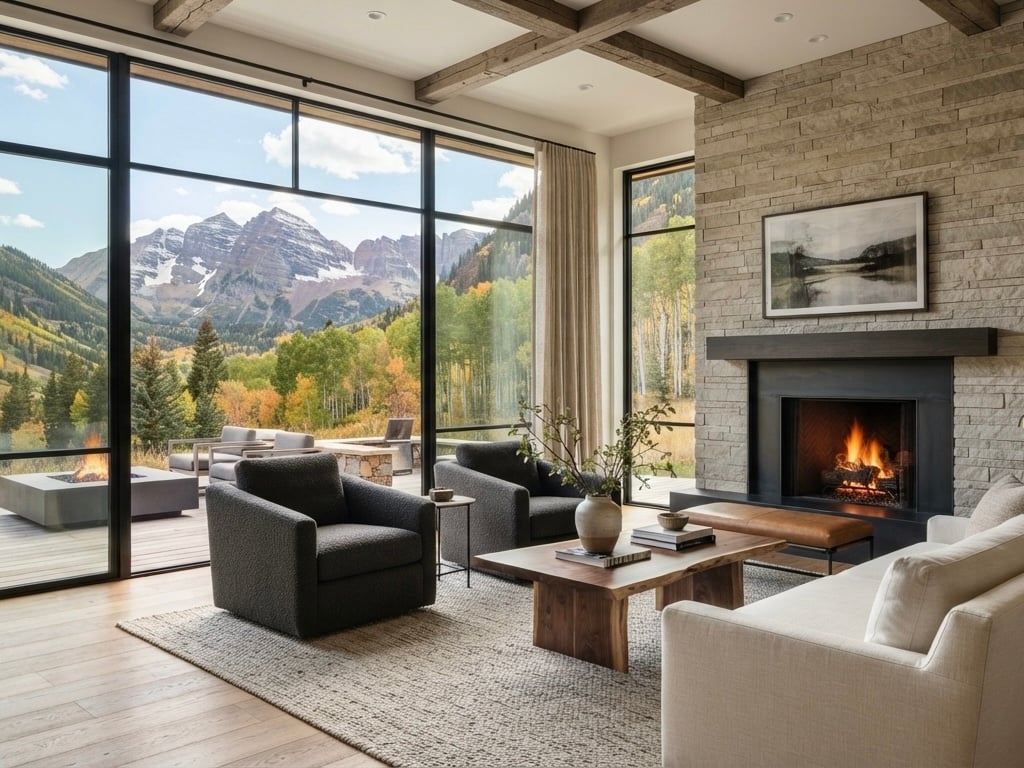
Contemporary mountain architecture often includes clean lines, expansive glass, steel, stone, and open spaces.
Without balance, those ingredients can become severe.
Aspen interiors frequently solve that problem through warmth.
Wood softens glass.
Textiles soften stone.
Handmade objects interrupt perfect surfaces.
A plush sofa sits beneath an architectural ceiling.
A tactile rug grounds a contemporary room.
The result can feel thoroughly modern without sacrificing what people ultimately want from a mountain home:
comfort.
That balance has become an important part of Aspen's evolving design language—moving away from predictable rustic clichés without abandoning the sense of retreat that makes mountain living appealing.
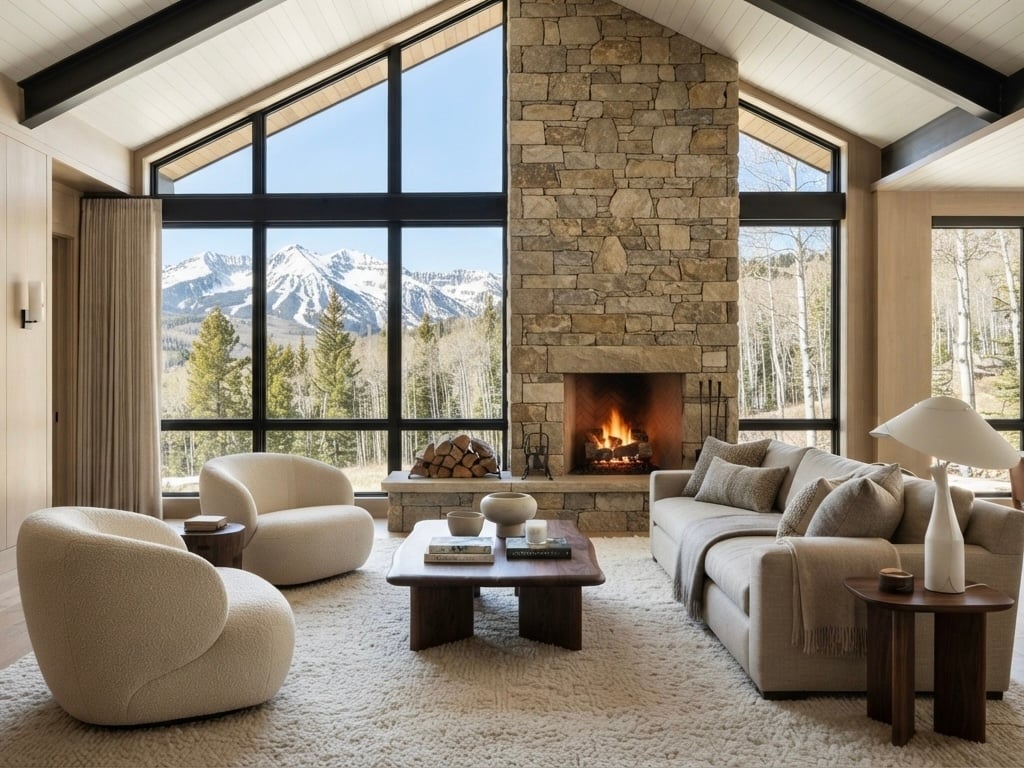
Wood belongs naturally in mountain architecture.
The difference is in how it's used.
Instead of covering every surface in dark timber, contemporary Aspen interiors might use white oak flooring, reclaimed beams, walnut cabinetry, or textured wood paneling more selectively.
The grain becomes part of the decoration.
So does imperfection.
Reclaimed wood can introduce history into an otherwise contemporary space, while lighter woods can make rooms feel bright and modern without losing their connection to nature.
And because Aspen homes are often surrounded by forests, the material creates a subtle conversation between indoors and out.
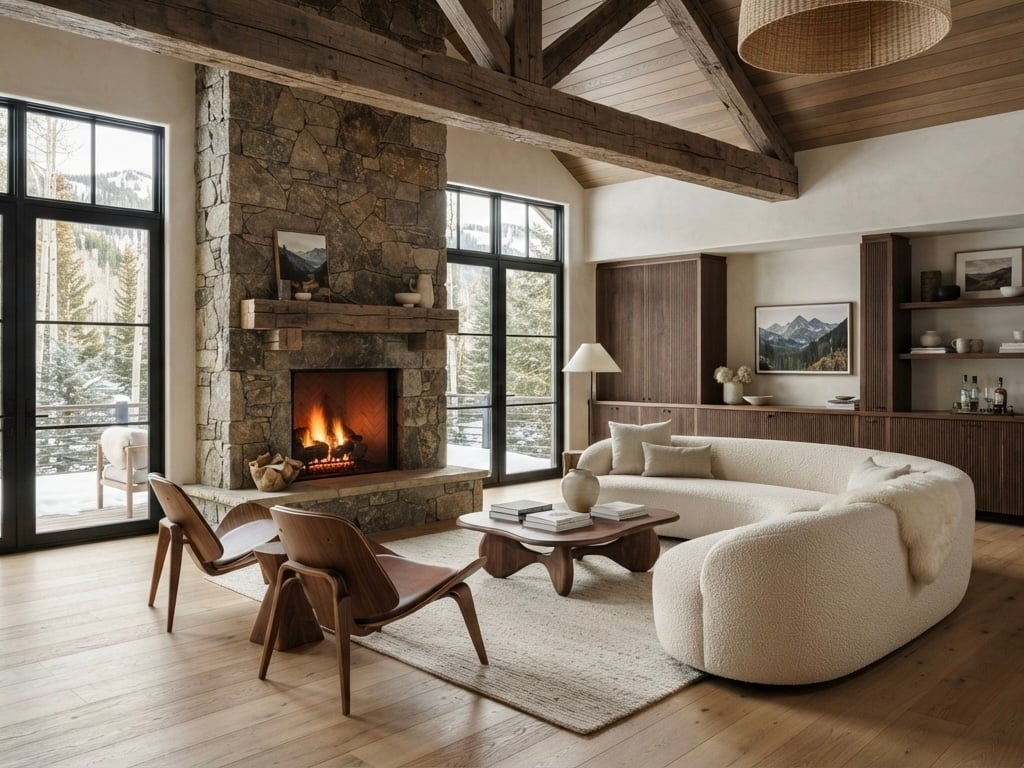
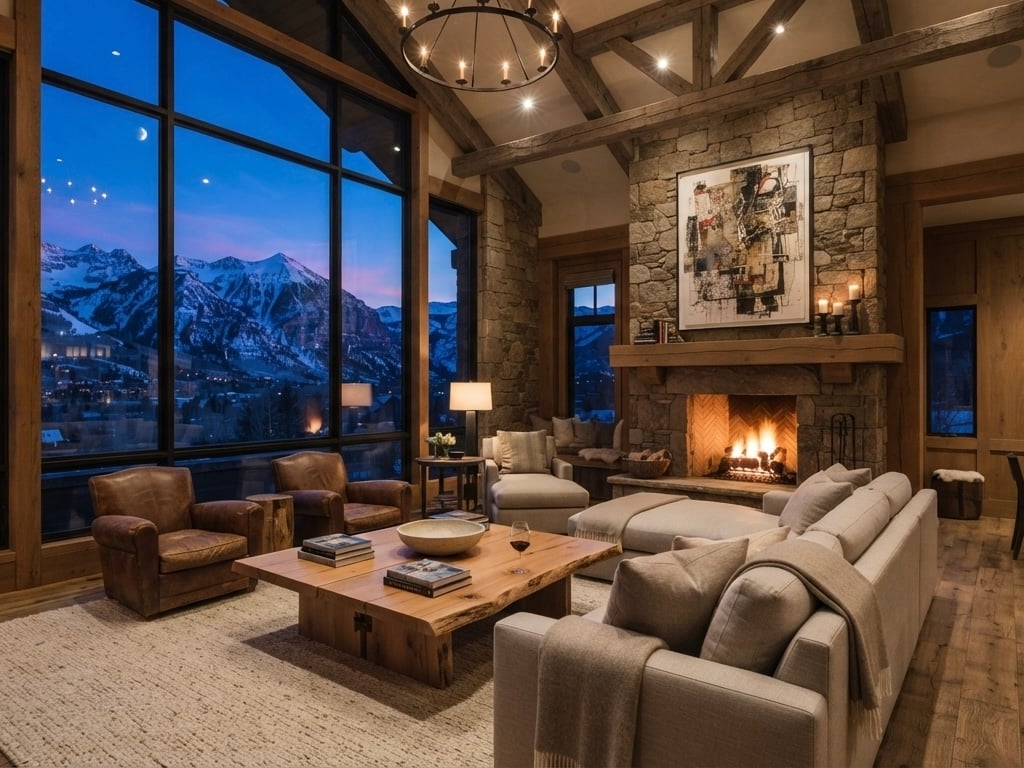
If wood brings warmth, stone brings weight.
It connects a home visually to the mountains around it.
Local and natural stone can appear around fireplaces, along walls, beneath floors, or across exterior surfaces that continue into the interior.
But contemporary applications tend to feel more restrained than the massive stonework associated with older mountain lodges.
A fireplace might become a monolithic architectural element.
A single stone wall can anchor an otherwise light-filled room.
A beautifully veined slab can introduce natural movement into a minimalist kitchen or bath.
The material remains ancient.
The expression becomes modern.
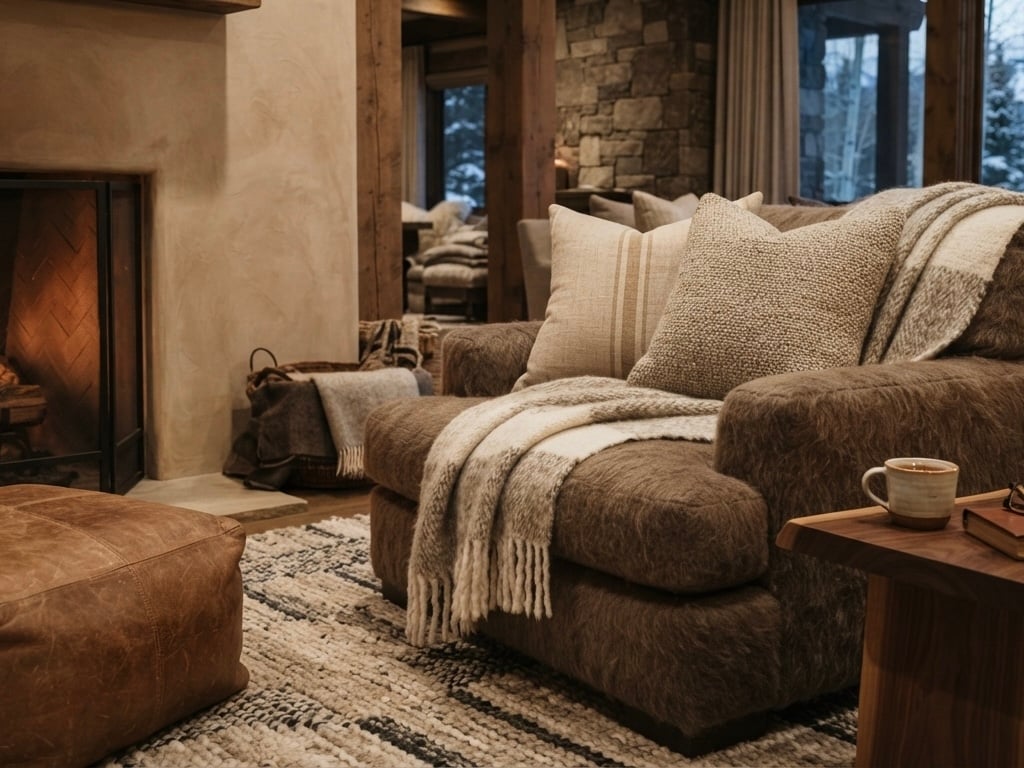
A mountain home should make you want to touch things.
Wool.
Mohair.
Cashmere.
Leather.
Bouclé.
Linen.
Natural fibers.
Textured plaster.
These materials matter because mountain interiors aren't experienced only with your eyes.
You experience them after coming inside from the cold.
Barefoot on a quiet morning.
Curled up beside a fireplace.
Gathered around a table after a day outdoors.
Layering tactile materials softens architecture that might otherwise feel overly polished.
And when the palette is restrained, texture becomes even more important.
A room can be almost entirely neutral and still feel incredibly rich.
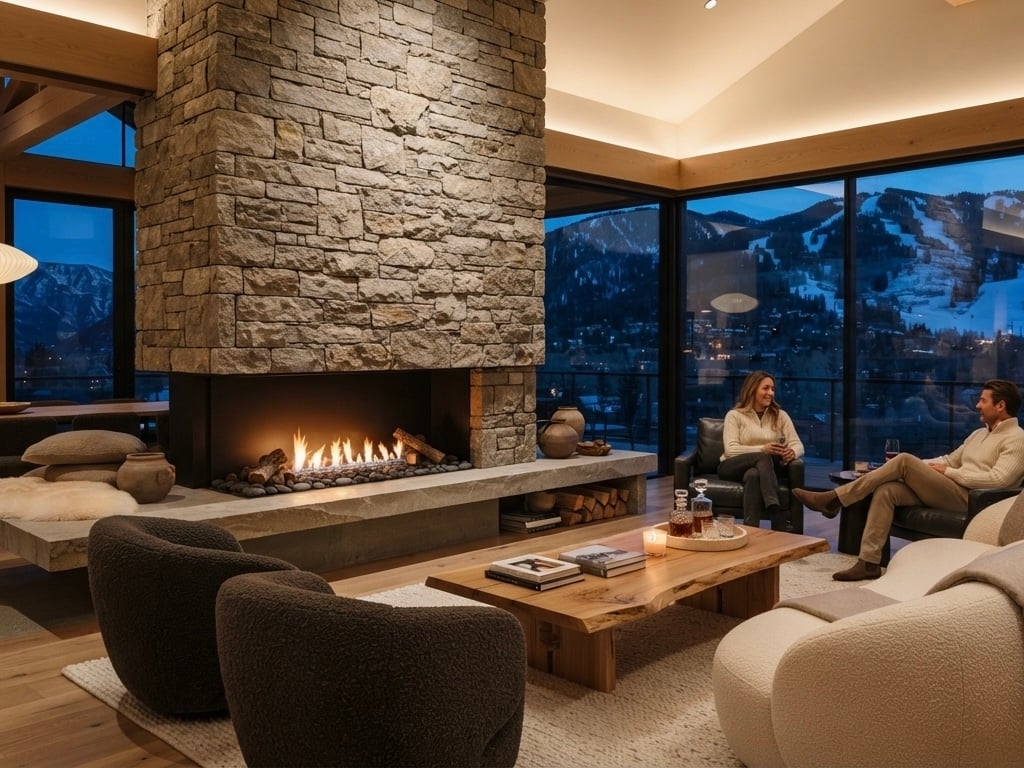
Mountain design may evolve.
The fireplace remains.
It is functional, atmospheric, and deeply tied to the ritual of mountain living.
But fireplaces themselves have changed.
Some retain the grandeur of traditional stone hearths.
Others become clean architectural forms built from steel, plaster, concrete, or slabs of natural stone.
Double-sided fireplaces can connect spaces.
Outdoor fireplaces can extend the season onto terraces.
And intimate fireplaces in bedrooms or dens can create quieter retreats away from the home's main gathering spaces.
Whatever the aesthetic, the purpose remains wonderfully familiar.
Everyone eventually gathers around it.
Aspen's relationship with art and design extends far beyond its homes.
The city's cultural identity includes institutions such as the Aspen Art Museum and a long history of modernism-influenced architecture and design.
That sensibility naturally carries into residential interiors.
A mountain house can also be a gallery.
Large walls accommodate contemporary paintings.
Sculpture creates tension against organic materials.
A dramatic light fixture becomes an artwork in its own right.
And modern pieces can look particularly striking against something as elemental as timber or stone.
Rather than filling a home with objects that announce "mountain," art lets interiors reflect the people who actually live there.
That's far more interesting.
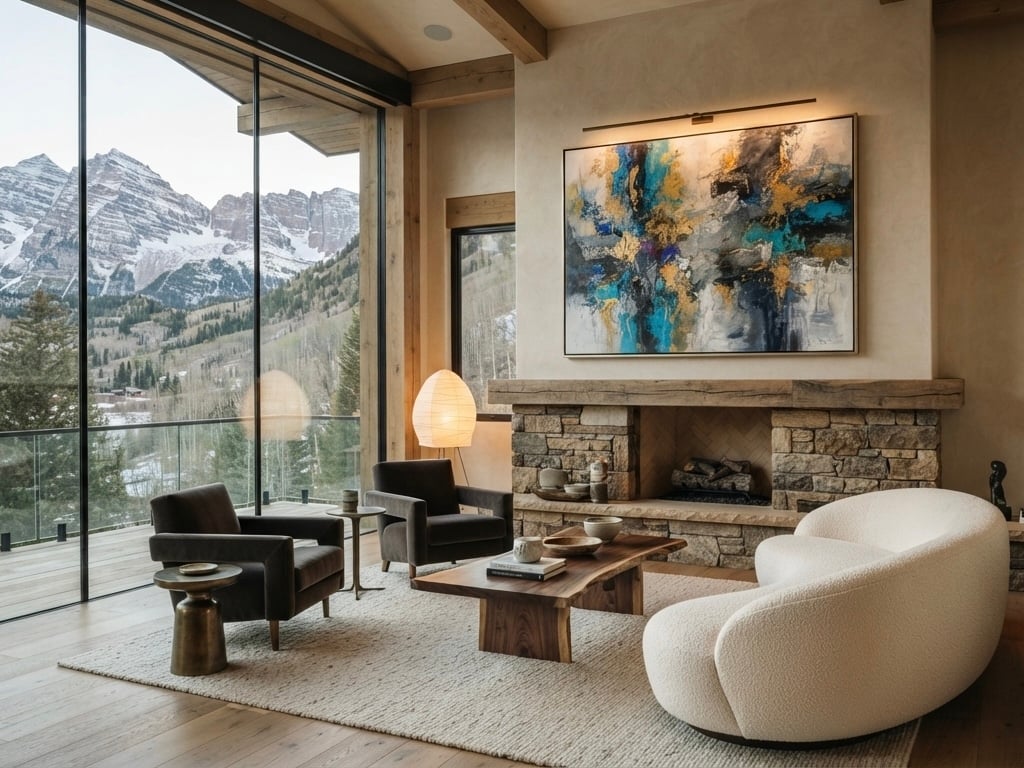
It's easy to imagine an Aspen home covered in snow.
But Aspen isn't lived in only during winter.
Summer brings open doors, hiking, cycling, and long evenings outside.
Fall fills the landscape with gold.
Spring introduces mud, changing weather, and a very different rhythm.
A truly successful mountain home responds to all of it.
Outdoor terraces need to feel connected to interior gathering spaces.
Furniture has to accommodate both ski clothing and summer entertaining.
Entry areas need to handle boots, gear, dogs, and snow without making the rest of the house feel utilitarian.
Storage becomes essential.
Durability matters.
And outdoor spaces increasingly function as true extensions of the interior.
The most luxurious solution is often the one that makes everyday mountain life feel effortless.
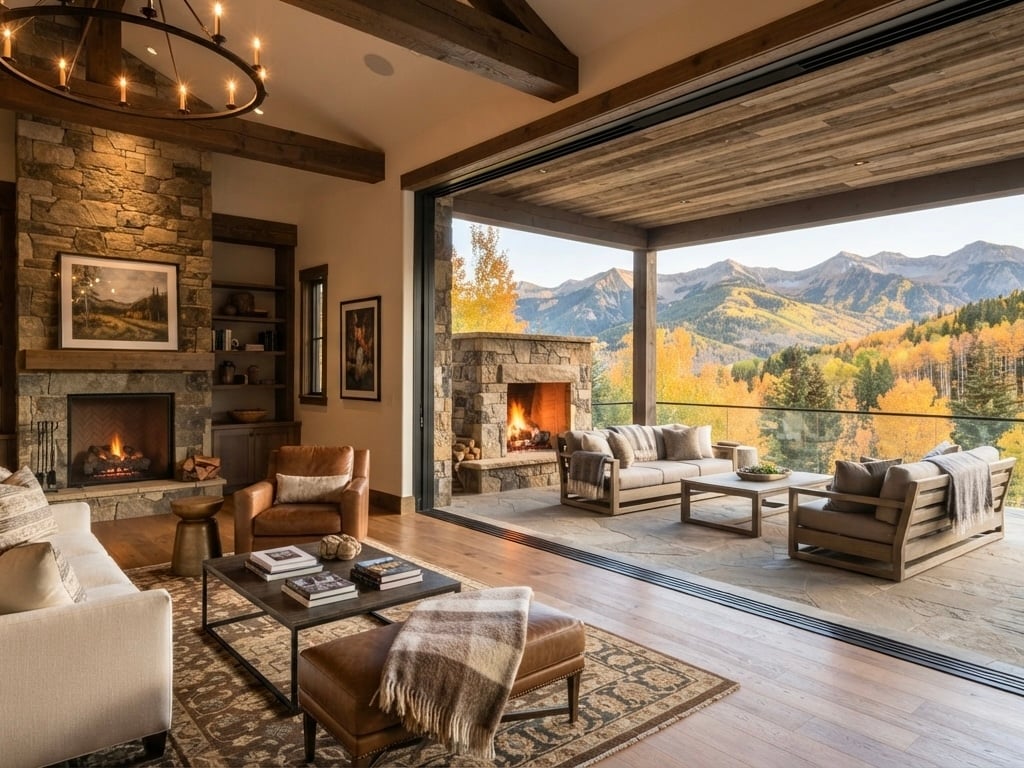
It isn't the glamorous answer.
But anyone who actually spends time in the mountains understands.
The mudroom matters.
Skis.
Boots.
Helmets.
Hiking gear.
Coats.
Gloves.
Dogs.
Snow.
Mud.
A beautifully designed mountain home needs somewhere for real life to land.
The best versions elevate utility through thoughtful cabinetry, benches, durable flooring, equipment storage, boot warmers, and designated places for everything.
Done well, the space feels organized, not purely functional.
Because luxury isn't having no mess.
It's having somewhere beautifully designed for the mess to go.
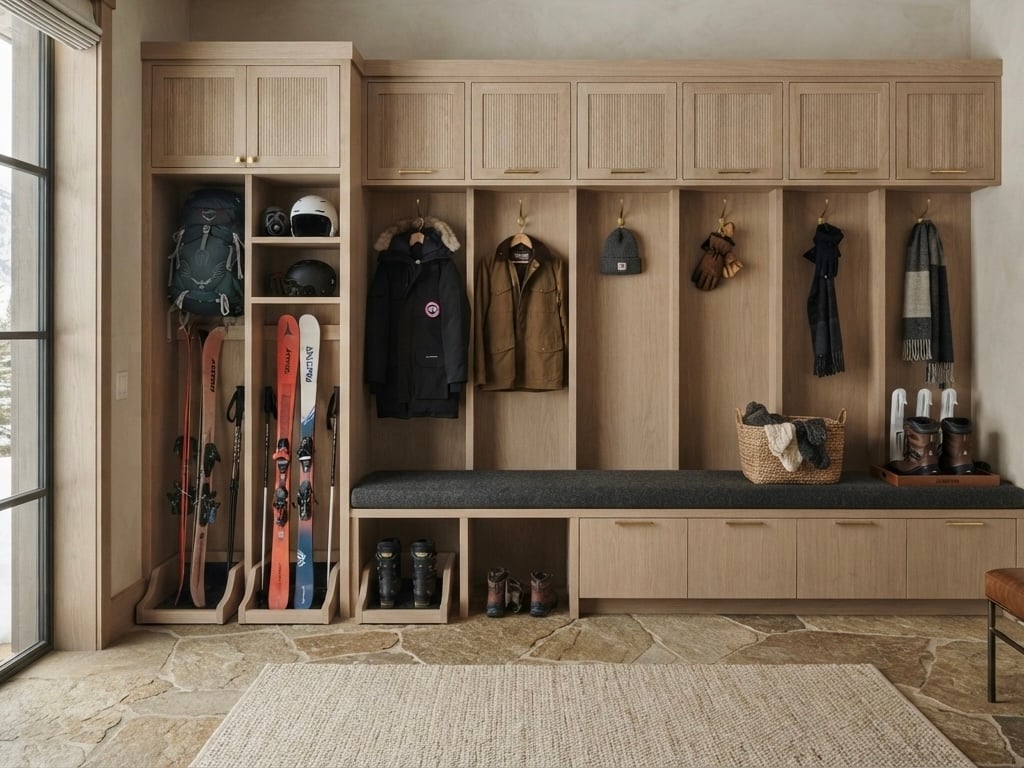
Indoor-outdoor living isn't exclusive to the California coast.
It simply works differently in Aspen.
Here, terraces may include radiant heat.
Fireplaces extend their usefulness into cooler evenings.
Retractable glass doors connect you to the landscape when the weather allows.
Covered areas provide shelter.
Hot tubs become part of the ritual.
And furniture needs to survive dramatically changing conditions.
The goal isn't necessarily to pretend there's no boundary between indoors and out.
The climate would quickly remind you otherwise.
Instead, good design makes crossing that boundary easy.
On the right afternoon, the entire house can open toward the mountains.
When the temperature drops, everyone moves back inside.
Either way, the landscape remains part of the room.
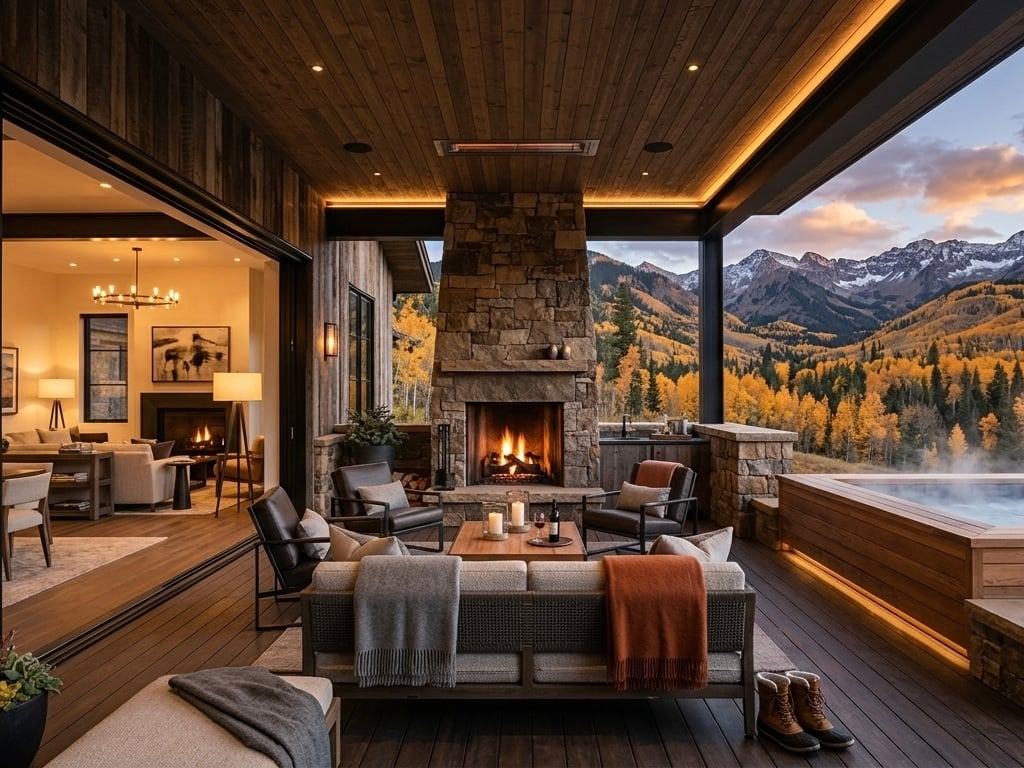
Mountain light has personality.
Morning can be crisp and cool.
Afternoon sunlight pours across valleys.
Winter snow reflects brightness into interiors.
And autumn turns entire mountainsides gold.
Aspen homes that respond well to natural light can feel different almost every hour.
Large expanses of glass are part of the equation, but they're not the whole answer.
Deep overhangs can control intense sun.
Windows can frame views rather than simply expose them.
Sheer materials can soften glare.
Warm interior lighting becomes especially important once the sun drops behind the mountains.
The best lighting plans work with nature rather than trying to replace it.
That's important.
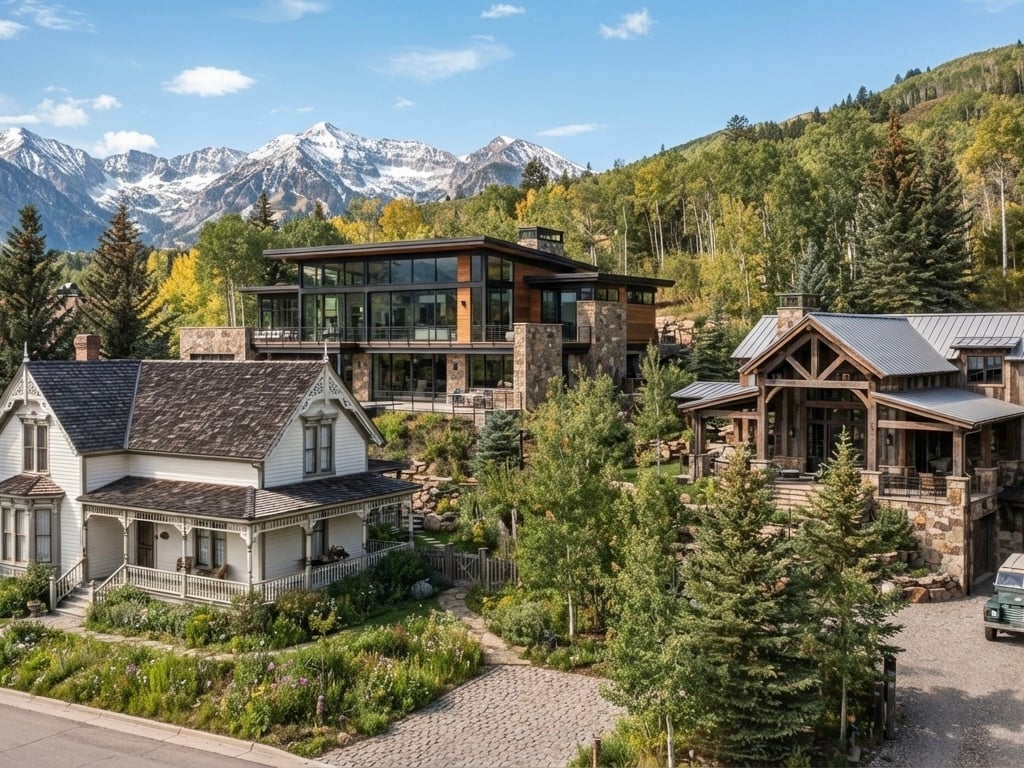
Aspen's built environment contains layers of history.
Victorian residences still define parts of the West End.
Modernist thinking has deep roots in the city.
Traditional ranch and lodge influences remain visible throughout the valley.
And contemporary architecture continues to introduce new interpretations of mountain living.
The best interiors don't erase that context.
They respond to it.
A historic home may call for a very different design language than a glass-and-stone residence on the mountainside.
A ranch property shouldn't necessarily feel like a downtown condominium.
And a contemporary home doesn't need antlers on the wall simply to prove that it's in Colorado.
Good design begins with the building, the landscape, and the people who will live there.
It isn't a formula.
There is no required wood species.
No mandatory stone fireplace.
No specific chair that suddenly makes a room "mountain."
It's something more subtle.
The home acknowledges the landscape without becoming themed around it.
It makes warmth feel as important as beauty.
It accommodates real mountain life without sacrificing sophistication.
It understands that muddy boots and contemporary art can coexist.
That enormous windows and intimate rooms both have a place.
That a house can feel extraordinary without competing with the mountains outside.
Ultimately, Aspen's most distinctive interiors don't simply decorate a home in the mountains.
They design for what it feels like to live in them.
The most memorable mountain homes understand that Aspen is full of contrasts.
Wild landscape and sophisticated culture.
Adventure and indulgence.
Historic architecture and contemporary design.
Snowy winter mornings and warm summer afternoons.
A great Aspen interior holds those contrasts comfortably.
It's beautiful enough to frame a remarkable art collection, but practical enough for everyone to walk through the door after skiing.
It's contemporary without becoming cold.
Comfortable without becoming predictable.
And luxurious without forgetting why the home is here in the first place.
The mountains.
At REQUISITE Luxury Properties, we believe the most extraordinary Aspen homes understand the relationship between design and place—homes created not simply to be admired, but to make mountain living feel exceptional.
Mountain-modern design combines contemporary architecture and clean lines with natural materials, warmth, texture, and a strong connection to the surrounding landscape. In Aspen, it can include glass, stone, wood, plaster, contemporary art, and sophisticated furnishings without relying on traditional rustic motifs.
Wood, natural stone, glass, metal, plaster, wool, leather, linen, and other tactile natural materials frequently appear in mountain homes. The exact palette varies considerably depending on the architecture and design direction.
Contemporary and mountain-modern architecture are prominent in Aspen, but the area's design landscape is diverse. Historic Victorian homes, ranch-inspired residences, traditional mountain properties, and modern architecture all coexist throughout Aspen and the Roaring Fork Valley.
Practical considerations can include thoughtful gear storage, mudrooms, durable materials, fireplaces, flexible gathering spaces, indoor-outdoor connections, covered terraces, heating solutions, and rooms designed to work across Aspen's changing seasons.
Large windows allow homes to take advantage of mountain views and natural light while creating a stronger visual connection between interiors and the surrounding landscape.
The best realtor combines local market expertise with personalized service and a deep understanding of the luxury lifestyle.
At REQUISITE Luxury Properties, we help buyers and sellers navigate the Aspen and Snowmass luxury market with local expertise, strategic guidance, and exceptional client care.
Stay up to date on the latest real estate trends.

Community & Local Living
The last golden trails, quiet afternoons downtown, mountain traditions, live performances, and the first hints of ski season—October belongs to those who know how to e… Read more
Homeownership & Lifestyle
Natural materials, extraordinary views, tactile layers, contemporary art, and rooms designed around the seasons—all part of the evolving language of Aspen mountain des… Read more
Luxury & Lifestyle
No skis required. In Aspen, après is less about what you did on the mountain—and more about how beautifully you end the day.

Community & Local Living
Golden afternoons, seasonal ingredients, intimate dining rooms, and a new Restaurant Week—September is a delicious time to experience Aspen.

Community & Local Living
The scenic drives, mountain trails, iconic views, and quiet corners make September one of Aspen's most spectacular seasons.

Community & Local Living
Your guide to live music, food and wine, outdoor adventures, and the first signs of fall in the Rockies.
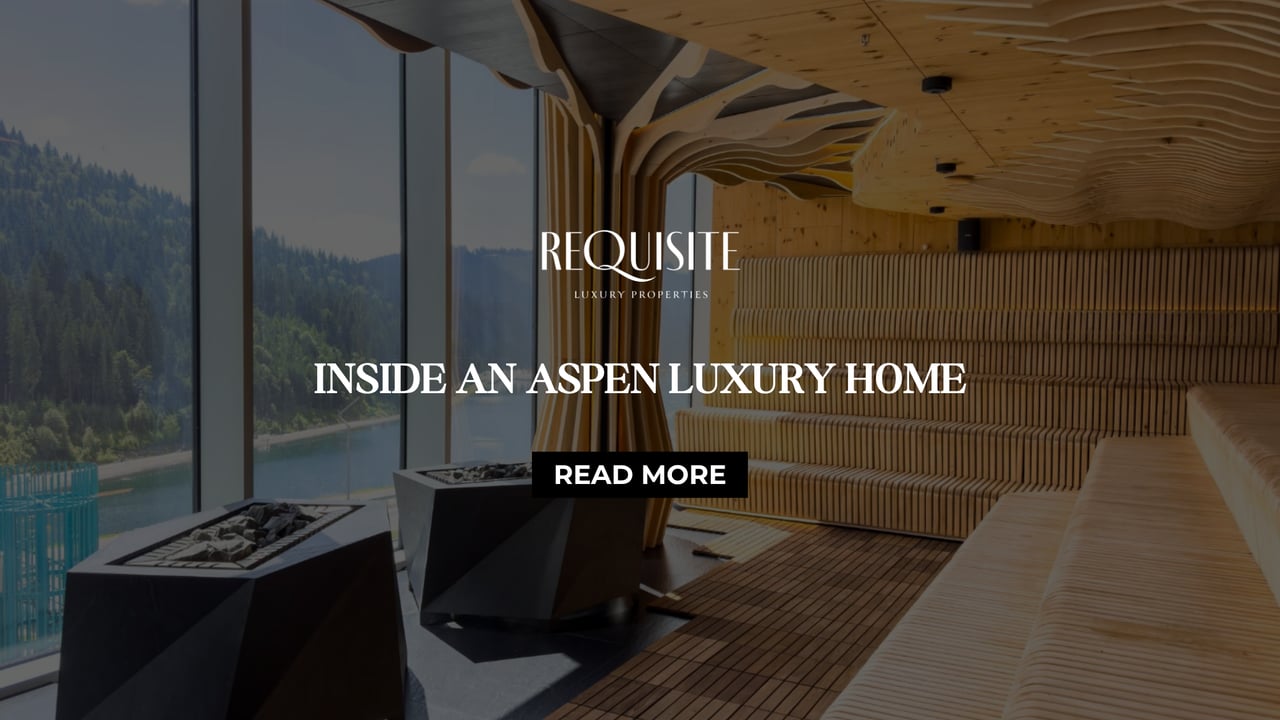
Design & Renovation Trends
The spaces that define exceptional mountain living.
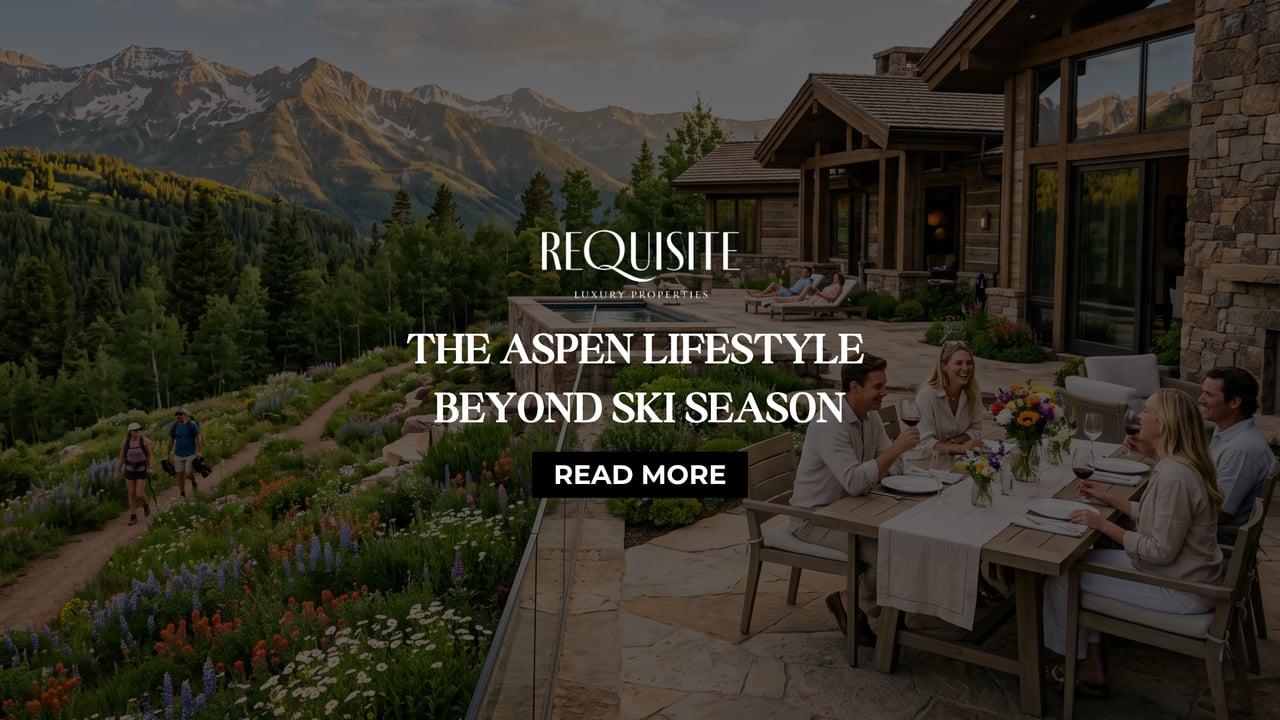
Community & Local Living
Discover why Aspen is just as extraordinary in spring, summer, and fall as it is in winter.

Community & Local Living
Why August and early September are Aspen's best-kept secret.
REQUISITE Luxury Properties combines deep local expertise, skilled negotiation, and regulatory know-how to guide buyers and sellers through successful, seamless transactions in Aspen and Snowmass Village.